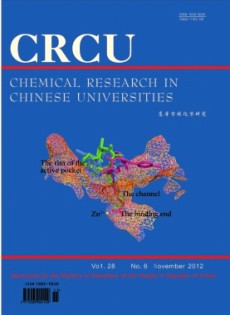
《Chemical Research in Chinese Universities》的版面费计算方法如下:
1.按版面计算:具体版面计算方式可联系杂志社或咨询在线客服。如果文章超出定义范围则需要多支付一版面的费用。
2.按字数计算:有些期刊会根据论文的字数来计算版面费,例如每千字收取一定费用。
3.额外费用:如果文章需要彩色印刷(如图表、图片),可能会额外收取费用。
4.期刊级别和收录数据库:期刊的级别和被不同数据库收录的情况也会影响版面费。例如,知网收录的期刊版面费通常较高。
5.期刊政策与优惠:部分期刊可能对特定群体(如学生、学者等)提供版面费优惠。
6.开放获取:开放获取期刊通常按文章收取费用,费用较高,涵盖同行评审、编辑、出版和在线传播等成本。
《Chemical Research in Chinese Universities》杂志的版面费计算方式相对明确,主要依据文章所占据的版面数量进行收费。作者在投稿前,应仔细核对文章字数,并根据期刊的收费标准合理预算版面费。
《Chemical Research in Chinese Universities》杂志创刊于1984年,是一本由国家教育部主管、主办的学术性期刊。该杂志为双月刊,审稿周期为预计1-3个月,国内统一刊号为22-1183/O6,国际标准刊号为1005-9040。
《Chemical Research in Chinese Universities》杂志的主要栏目包括: 研究论文、研究快报、研究简报、综合评述,该杂志注重学术性与实践性结合,鼓励创新性研究,尤其欢迎具有理论深度或实证价值的论文。其刊载文章多涉及教育政策分析、教育技术应用等热点议题,为教育工作者提供前沿的学术参考。
该杂志在学术界具有较高影响力,被CSCD 中国科学引文数据库来源期刊(含扩展版)、维普收录(中)、SCI 科学引文索引(美)、万方收录(中)、知网收录(中)、Pж(AJ) 文摘杂志(俄)、JST 日本科学技术振兴机构数据库(日)、CA 化学文摘(美)收录,这意味着论文能够被更广泛的学术群体检索和引用,有助于提升研究成果的传播范围和学术影响力。
根据最新数据,其影响因子:1.06,表明该杂志在教育研究领域具有较高的学术认可度。
《Chemical Research in Chinese Universities》杂志须知(审稿周期:预计1-3个月)
一、MANUSCRIPT SUBMISSION
When you first submit your paper, please upload the Word or PDF file. When your paper is accepted, you will be required to send the original source files. Submissions should be accompanied by a brief covering letter from the corresponding author. All correspondence, including the editor’s decision and request for revisions, will be done by e-mail. Chemical Research in Chinese Universities applies a non-refundable submission fee which the author(s) have to pay when the manuscript is ready to submit . If a paper is accepted for publication there will also be a publication fee.
二、MANUSCRIPT PREPARATION
Title: The paper title should be simple, concise and informative. Author(s): A list of all authors and their corresponding addresses with post codes for an effective mail delivery should be provided. The telephone and fax numbers (with country and area code) in addition to the e-mail address and the complete postal address of the corresponding author should be given. Abstract: An abstract is a summary of the content of the manuscript. Figures, tables, chemical structural formula, equations, reference citations should be avoided. Keywords: A list of 3-5 keywords should follow the abstract. Text: Organize the text as Introduction, Experimental, Results and Discussion, Acknowledgment and References. Physical quantities, units and symbols, etc., when used, should be consistent with the International System of Units (SI) and the Quantities and Units of the State
Standards of the People’s Republic of China. Latin and Greek Characters should be labeled. Figures and Tables: Figures and tables should be consecutively numbered with Arabic numerals in the order of in which they are mentioned in the text; each figure should have a descriptive legend. All illustrations should be in a finished form suitable for reproduction. No figures should exceed 10 cm×12 cm, which is large enough to take a reduction of 50%. Coordinate axes on figures should be labeled with the ordinate label written vertically and labels for quantities with dimensions should include units. Drawings should be of professional q uality or generated by high-resolution computer graphics. Equations: An equation is numerically numbered (Arabic numeral), and has the number put on its right side. References: References to the literature should be cited in the text by Arabic numerals in square brackets set on the text line, and listed numerically at the end of the paper. Style and punctuation of references should be in accordance with the following examples:
[1]Hu S. Q., Huang K. K., Hou C. M., Yuang H. M., Hu B., Feng S. H., Chem. Res. Chinese Universities, 2010, 26(5), 675
[2]Pines H., The Chemistry of Catalytic Hydrocarbon Conversion, Academic Press, New York, 1981, 170
三、PEER REVIEW
All submissions will be reviewed by at least two referees selected by the editor. The author will be informed whether the manuscript is accepted within two months. If case of rejection, the manuscript won’t be returned to the authors. The revised manuscript must be sent to the editor within 50 days, from the date on which the editor sends the manuscript to the author, otherwise the editor will consider that the manuscript has been withdrawn by the author voluntarily.
四、COPYRIGHT TRANSFER
The Copyright Transfer Statement must be returned to the Editorial Department of Chemical Research in Chinese Universities when the manuscript is accepted for publication.
五、RESEARCH DATA POLICY
The journal encourages authors, where possible and applicable, to deposit data that support the findings of their research in a public repository. Authors and editors who do not have a preferred repository should consult Springer Nature’s list of reposi tories and research data policy.
General repositories - for all types of research data - such as figshare and Dryad may also be used.
Datasets that are assigned digital object identifiers (DOIs) by a data repository may be cited in the reference list. Data citations should include the minimum information recommended by DataCite: authors, title, publisher (repository name), identifier.
DataCite
Springer Nature provides a research data policy support service for authors and editors
This service provides advice on research data policy compliance and on finding research data repositories. It is independent of journal, book and conference proceedings editorial offices and does not advise on specific manuscripts.
省级期刊

省级期刊
统计源期刊
北大期刊
部级期刊