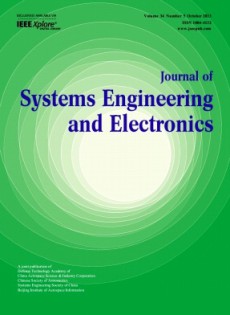
《Journal of Systems Engineering and Electronics》的版面费计算方法如下:
1.按版面计算:具体版面计算方式可联系杂志社或咨询在线客服。如果文章超出定义范围则需要多支付一版面的费用。
2.按字数计算:有些期刊会根据论文的字数来计算版面费,例如每千字收取一定费用。
3.额外费用:如果文章需要彩色印刷(如图表、图片),可能会额外收取费用。
4.期刊级别和收录数据库:期刊的级别和被不同数据库收录的情况也会影响版面费。例如,知网收录的期刊版面费通常较高。
5.期刊政策与优惠:部分期刊可能对特定群体(如学生、学者等)提供版面费优惠。
6.开放获取:开放获取期刊通常按文章收取费用,费用较高,涵盖同行评审、编辑、出版和在线传播等成本。
《Journal of Systems Engineering and Electronics》杂志的版面费计算方式相对明确,主要依据文章所占据的版面数量进行收费。作者在投稿前,应仔细核对文章字数,并根据期刊的收费标准合理预算版面费。
《Journal of Systems Engineering and Electronics》杂志创刊于1990年,是一本由中国航天科工集团主管、主办的学术性期刊。该杂志为双月刊,审稿周期为预计1-3个月,国内统一刊号为11-3018/N,国际标准刊号为1004-4132。
《Journal of Systems Engineering and Electronics》杂志的主要栏目包括: 系统工程、电子技术、军用系统分析、防御电子技术、控制理论与实践、软件、算法与仿真、计算机开发与应用,该杂志注重学术性与实践性结合,鼓励创新性研究,尤其欢迎具有理论深度或实证价值的论文。其刊载文章多涉及科学政策分析、科学技术应用等热点议题,为科学工作者提供前沿的学术参考。
该杂志在学术界具有较高影响力,被文摘与引文数据库、维普收录(中)、剑桥科学文摘、SCI 科学引文索引(美)、上海图书馆馆藏、国家图书馆馆藏、万方收录(中)、SA 科学文摘(英)、EI 工程索引(美)、知网收录(中)收录,这意味着论文能够被更广泛的学术群体检索和引用,有助于提升研究成果的传播范围和学术影响力。
根据最新数据,其影响因子:0.96,表明该杂志在科学研究领域具有较高的学术认可度。
《Journal of Systems Engineering and Electronics》杂志须知(审稿周期:预计1-3个月)
Aims and scope
The journal, keeping abreast with the development trend of science and technology worldwide, reports the latest developments and achievements in systems engineering and electronics and related research areas, and encourages various academic views. The journal welcomes papers from a wide variety of countries.
The journal strives to publish high-quality papers reporting original work in both theoretical and practical research results within the journal scope, involving system analysis, system modeling and simulation, military system analysis, aircraft control, C3I, radar, information systems engineering, machine intelligence, artificial neural networks, information acquisition and processing, aerospace electronics, and other topics in all related fields.
Title
The title is centered on the page and should be short and concise. Please limit the title to a maximum length of 10 words. The author’s name follows and is also centered on the page. The author’s last name should be preceded by the other names spelled out in full. The author’s affiliation and address are also needed.
The corresponding author should be clearly indicated with the asterisk (i.e., *) and given on the bottom of the first page. Please provide the financial support acknowledgments (name and number) on the bottom of the first page.
Abstract
An abstract, not exceeding 200 words, is required for all papers. Acronyms and abbreviations are spelled out at first mention in the abstract. It should be a summary of the paper and not an introduction. Because the abstract may be used in abstracting journals, it should present concisely the purposes, methodology used, results obtained, and conclusions.
Keywords
The author must provide a list of keywords, up to a maximum of six. No acronyms and abbreviations should be used.
Text
Text should be typed in double-column. The introduction of paper should explain the nature of the problem, previous work, purpose, and contribution of the paper. It is assigned the number “1” and following sections are assigned number as needed. For example, the third section of a paper might be “3. Simulation results” headings. Acronyms and abbreviations are spelled out at first mention in the text, even they have already been defined in the abstract.
Figures and tables
The authors must ensure figures of sufficient quality and resolution. Figure captions appear below the figures. Figures should be numbered in the order they appear in the text. Table titles appear above the tables. Please verify that the figures and tables you mention in the text actually exist. When referring to a figure or a table in the text, use the abbreviation “Fig.” even at the beginning of a sentence, and do not abbreviate “Table”.
Equations
Number equations consecutively with equation numbers in parentheses flush with the right margin, as in (1). Be sure that the symbols in the equation have been defined before the equation appears or immediately following. When referring to “(1)”, do not use “Eq. (1)” or “equation (1),” except at the beginning of a sentence: “Equation (1) is ...”.
Conclusion
A conclusion must be included and should indicate clearly the advantages, limitations, and possible applications of the paper.
Acknowledgment
Individuals or units other than authors who were of direct help in the work should be acknowledged by a brief statement following the conclusion. This heading is not assigned a number.
References
Only articles that have been published may be included in the references. Each reference is referred to in the text by a number enclosed in a square bracket (i.e., [3]). References must be numbered and ordered according to where they are first mentioned in the paper. A reference list must be included using the following information as a guide.
Biographies
Short biographies (120-150 words) should be provided that detail the authors’ education, work histories and research interests as well as their E-mail. The authors’ full names are needed. Small (2.5 cm×3.5 cm), black-and-white and high- resolution (300 dpi) photos of each author should be included.