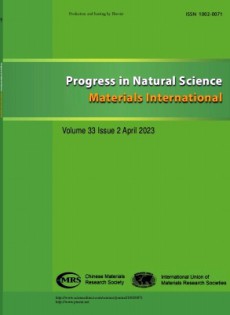
《Progress in Natural Science:Materials International》的版面费计算方法如下:
1.按版面计算:具体版面计算方式可联系杂志社或咨询在线客服。如果文章超出定义范围则需要多支付一版面的费用。
2.按字数计算:有些期刊会根据论文的字数来计算版面费,例如每千字收取一定费用。
3.额外费用:如果文章需要彩色印刷(如图表、图片),可能会额外收取费用。
4.期刊级别和收录数据库:期刊的级别和被不同数据库收录的情况也会影响版面费。例如,知网收录的期刊版面费通常较高。
5.期刊政策与优惠:部分期刊可能对特定群体(如学生、学者等)提供版面费优惠。
6.开放获取:开放获取期刊通常按文章收取费用,费用较高,涵盖同行评审、编辑、出版和在线传播等成本。
《Progress in Natural Science:Materials International》杂志的版面费计算方式相对明确,主要依据文章所占据的版面数量进行收费。作者在投稿前,应仔细核对文章字数,并根据期刊的收费标准合理预算版面费。
《Progress in Natural Science:Materials International》杂志创刊于1990年,该杂志为双月刊,审稿周期为预计1-3个月,国内统一刊号为10-1147/N,国际标准刊号为1002-0071。
《Progress in Natural Science:Materials International》杂志的主要栏目包括: 专题评述、学术论文、研究简讯、学术论坛、实验室通讯,该杂志注重学术性与实践性结合,鼓励创新性研究,尤其欢迎具有理论深度或实证价值的论文。其刊载文章多涉及科学政策分析、科学技术应用等热点议题,为科学工作者提供前沿的学术参考。
该杂志在学术界具有较高影响力,被知网收录(中)、万方收录(中)、文摘与引文数据库、SCI 科学引文索引(美)、JST 日本科学技术振兴机构数据库(日)、CSCD 中国科学引文数据库来源期刊(含扩展版)、CA 化学文摘(美)收录,这意味着论文能够被更广泛的学术群体检索和引用,有助于提升研究成果的传播范围和学术影响力。
根据最新数据,其影响因子:0.37,表明该杂志在科学研究领域具有较高的学术认可度。
《Progress in Natural Science:Materials International》杂志须知(审稿周期:预计1-3个月)
Article structure
Subdivision-numbered sections
Divide your article into clearly defined and numbered sections. Subsections should be numbered 1.1 (then 1.1.1, 1.1.2, ...), 1.2, etc. (the abstract is not included in section numbering). Use this numbering also for internal cross-referencing: do not just refer to 'the text'. Any subsection may be given a brief heading. Each heading should appear on its own separate line.
Introduction
State the objectives of the work and provide an adequate background, avoiding a detailed literature survey or a summary of the results.
Material and methods
Provide sufficient detail to allow the work to be reproduced. Methods already published should be indicated by a reference: only relevant modifications should be described.
Abstract
An abstract of 200 words or less should precede the introduction. The abstract should clearly indicate the nature of the manuscript and the results described therein.
A concise and factual abstract is required. The abstract should state briefly the purpose of the research, the principal results and major message. An abstract is often presented separately from the article, so it must be able to stand alone. For this reason, References should be avoided, but if essential, they must be cited in full, without reference to the reference list. Also, abbreviations should be avoided, but if essential they must be defined at their first mention in the abstract itself.
Keywords
Immediately after the abstract, provide 5 keywords, avoid general and plural terms and multiple concepts (avoid, for example, "and", "of"). These terms should be relatively independent (coordinate index terms) and, as a group, should optimally characterize the paper. Be sparing with abbreviations: only abbreviations firmly established in the field may be eligible. These keywords will be used for indexing purposes. Use keywords that make your paper easy detectable for interested readers in literature databases. Repeating terms in the title is usually not needed.